


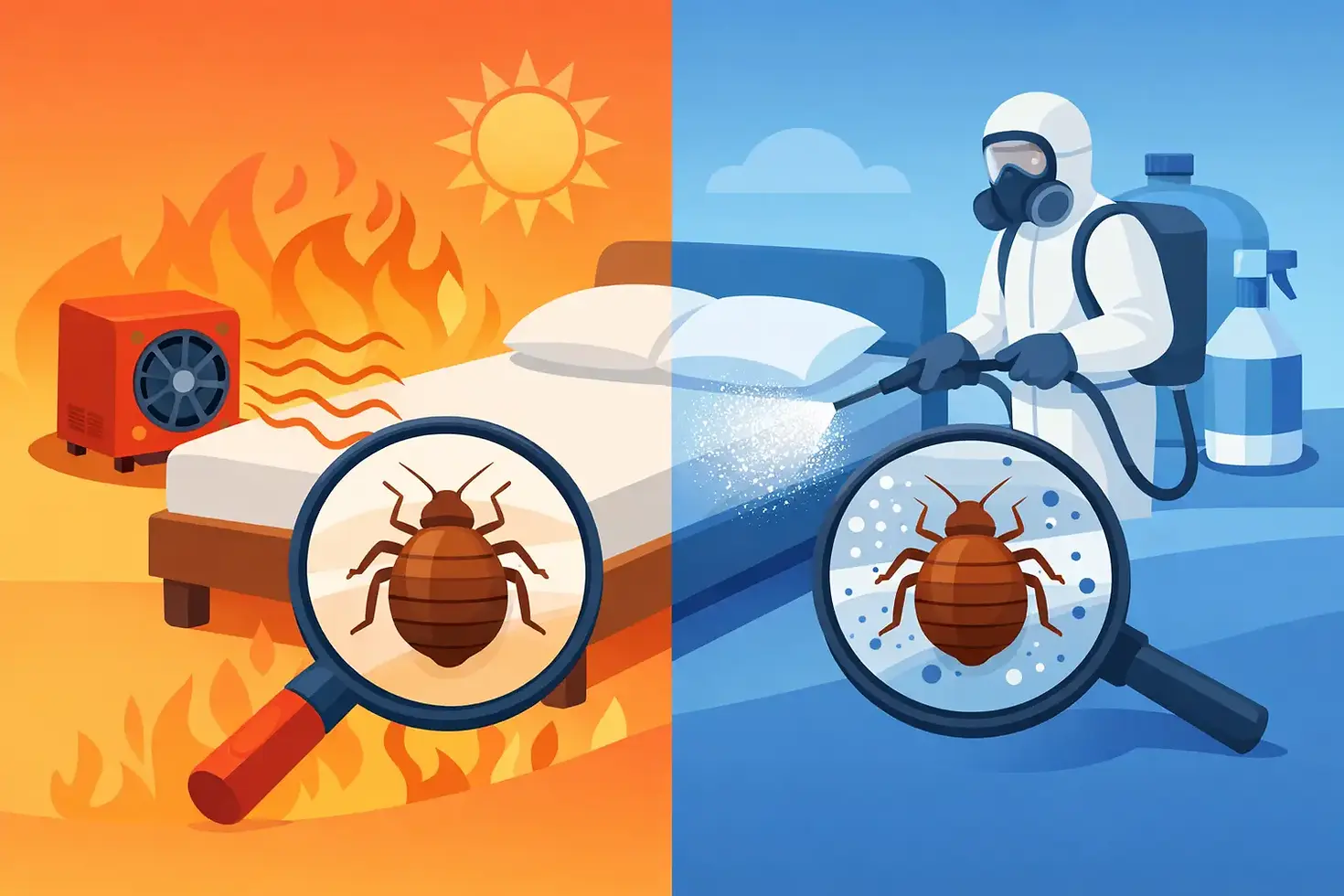
Bed Bug Heat vs Chemical Treatment: Which Works?

A bed bug problem can make even a well-kept home feel unsettled. When comparing bed bug heat vs chemical treatment, the right choice is not always the fastest-sounding option. It depends on the size of the infestation, where bed bugs are hiding, the condition of the property, and the need to protect children, pets, tenants, employees, and the environment.
Both methods can be effective when performed correctly. The strongest results often come from an Integrated Pest Management approach that combines inspection, targeted treatment, monitoring, and prevention rather than relying on one broad solution.
How Bed Bug Heat Treatment Works
Professional heat treatment raises the temperature inside an infested room or structure to a level that is lethal to bed bugs and their eggs. Specialized equipment circulates heated air while technicians place sensors throughout the treatment area. The goal is to reach and maintain effective temperatures in difficult places, including mattress seams, furniture joints, baseboards, cracks, and areas around beds.
Heat is appealing because it can kill all bed bug life stages in a single treatment period. Eggs are a major concern in any infestation because they can survive some treatments that kill adult bugs. When heat is properly delivered and monitored, it addresses adults, nymphs, and eggs at the same time.
Heat also leaves no pesticide residue behind. For families concerned about chemical exposure in bedrooms, nurseries, or living spaces, that is a meaningful advantage. In many cases, residents may return after the treated area has cooled and the technician has confirmed that it is ready for reentry.
Where heat treatment can fall short
Heat only works where the required temperature reaches and remains long enough to kill bed bugs. Clutter, dense belongings, insulated wall voids, and certain construction features can create cooler pockets. A skilled technician accounts for those conditions with equipment placement, air movement, temperature monitoring, and preparation instructions.
Heat also has little to no residual effect. If a bed bug is brought into the home after treatment through luggage, used furniture, a neighboring unit, or a visitor’s belongings, it will not be stopped by the prior heat service. This matters in multi-unit housing, where a unit-by-unit approach may not address the full source of activity.
Preparation can be substantial as well. Some belongings must be removed or handled separately, and heat-sensitive items may need special attention. Candles, aerosols, certain medications, plants, vinyl items, and electronics require careful review before treatment. A professional will provide specific preparation guidance based on the property.
How Chemical Bed Bug Treatment Works
Chemical treatment uses registered pest control products applied strategically to places where bed bugs travel, hide, or rest. It is not simply a matter of spraying an entire room. Responsible treatment focuses on cracks and crevices, bed frames, furniture, baseboards, and other confirmed or likely harborages.
Depending on the product and situation, chemical treatment may provide residual protection. That means bed bugs that emerge from hidden spaces or cross treated areas after service can still be affected. Residual activity is especially useful when the infestation is spread through structural voids or when ongoing movement from adjacent units is possible.
Most chemical programs require more than one visit. Bed bugs can be difficult to reach, and no responsible provider should promise that a single light application will resolve every infestation. Follow-up inspections and treatments allow the technician to respond to newly emerged bed bugs, fresh evidence, or untreated harborages.
The safety and effectiveness question
The word “chemical” can mean many things. Product selection, application method, dosage, and technician training all affect the safety profile of a service. Broad, high-toxicity pesticide use is not the only option, and it is not the responsible first choice for every home or business.
An eco-conscious pest management provider can use reduced-toxicity products in a targeted way, alongside non-chemical controls such as vacuuming, mattress encasements, interceptors, steam, laundering, and exclusion. This approach reduces unnecessary exposure while still treating the areas where bed bugs are most likely to be found.
Chemical treatment does require residents to follow reentry and preparation instructions. Items may need to be moved away from walls, bedding may need to be washed and dried on high heat, and treated surfaces should not be wiped down before the technician’s recommended interval. Following these directions protects the treatment’s performance and helps prevent bed bugs from relocating to new hiding places.
Bed Bug Heat vs Chemical: Key Differences
The biggest difference is speed versus residual control. Heat can often eliminate an established infestation in one concentrated service, provided the treatment area is properly prepared and temperatures are verified throughout. Chemical treatment typically takes longer, but it can continue working after the technician leaves.
Heat is often a strong option for heavily infested bedrooms, single-family homes, or situations where a rapid, residue-free approach is preferred. It may also be useful when bed bugs have been found in furniture, mattresses, and other contents that are difficult to treat thoroughly with a liquid product alone.
Chemical treatment can be the more practical choice when an infestation is limited, when the budget does not allow whole-room heat, or when ongoing residual protection is valuable. It can also be effective in apartments, condominiums, hotels, and commercial settings where bed bug movement may extend beyond one room or one unit.
Cost is another real consideration. Heat treatment often has a higher upfront cost because it requires specialized equipment, extensive setup, active monitoring, and a concentrated service period. Chemical programs can have a lower initial cost, although multiple visits may be needed. The least expensive quote is not always the best value if it does not include inspection, follow-up, or a clear plan for persistent activity.
Why an Integrated Approach Often Performs Best
For many Los Angeles and Orange County properties, the most dependable solution is not heat or chemical treatment alone. It is a plan built around the conditions that allowed bed bugs to establish themselves in the first place.
A thorough inspection identifies where activity is concentrated and whether it may be spreading. Technicians look for live bed bugs, shed skins, eggs, dark spotting, and likely travel routes around beds, upholstered furniture, baseboards, and nearby rooms. In apartments and commercial properties, communication with property management may be necessary to determine whether adjacent spaces should be inspected as well.
From there, treatment can be tailored. Heat may be used to rapidly address a heavily infested area, while targeted reduced-toxicity products may be used in cracks, voids, or neighboring risk zones where residual protection is helpful. Monitoring devices and follow-up inspections confirm whether the population has been eliminated rather than assuming the problem is gone because bites have stopped.
This is the foundation of Integrated Pest Management. It treats bed bugs while reducing unnecessary pesticide use and addressing the conditions that support reinfestation.
Preparation Makes Either Treatment More Effective
No treatment method can compensate for skipped preparation. Bed bugs are expert hitchhikers, and moving infested belongings from room to room can spread the problem. Keep items contained as directed, rather than carrying loose clothing, bedding, or bags through the home.
Laundering and drying washable linens, clothing, and fabrics on high heat can kill bed bugs and eggs. Clean items should be sealed in bags or bins until the technician advises otherwise. Vacuuming visible bed bugs and debris can help reduce the population, but the vacuum contents should be sealed and discarded outside immediately.
Avoid using store-bought foggers or “bug bombs.” These products often fail to reach the cracks and seams where bed bugs hide. They can also drive bed bugs deeper into walls or into adjoining rooms, making professional treatment more difficult. Similarly, do not apply multiple over-the-counter products before an inspection unless directed by a licensed professional.
Choosing the Right Bed Bug Treatment for Your Property
Start with a professional inspection and an honest discussion of your priorities. If you need a rapid, residue-free option and can complete detailed preparation, heat may be a good fit. If the infestation is smaller, spread through structural areas, or at risk of returning from nearby units, a targeted chemical program with follow-up may offer better long-term control.
Ask what the service includes: inspection, preparation guidance, monitoring, follow-up visits, warranty terms, and recommendations for preventing reinfestation. A responsible provider should explain not only what will be done, but why that approach fits your home or facility.
At Earth First Pest Control, the goal is effective bed bug control without treating your living space like a chemical dump site. A careful, low-impact plan protects the people and pets who use the space every day while giving bed bugs fewer places to hide and fewer chances to return.
If you suspect bed bugs, keep the evidence, avoid moving belongings between rooms, and arrange an inspection promptly. Early, targeted action is easier on your home, your budget, and the environment than allowing a small infestation to become a larger one.


Comments