


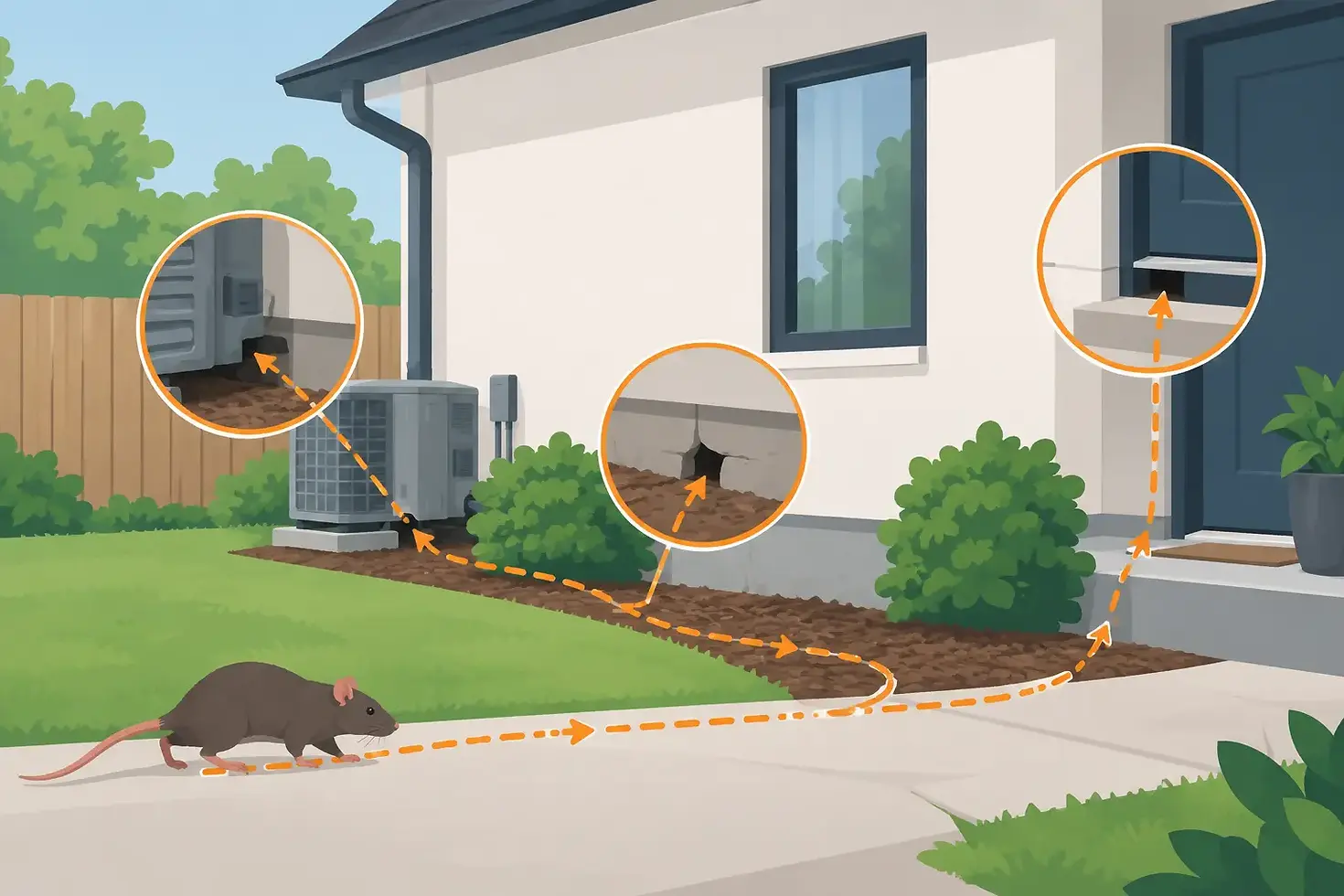
How to Identify Rat Pathways Around Your Home

A rat may visit your property for several nights before you ever see it. It is more likely to travel close to a fence, wall, shrub line, or utility route than across an open yard. Knowing how to identify rat pathways helps you find the real source of activity early, before a few nighttime visitors become an indoor infestation.
Rats are creatures of habit. Once they find food, water, cover, and a reliable route, they often use the same travel lanes repeatedly. Those routes leave small but useful clues. By looking in the right places and correcting the conditions that attract rodents, homeowners and property managers can take a prevention-first approach that protects children, pets, and the surrounding environment.
Why rat pathways matter
Seeing droppings in a garage or hearing movement in an attic tells you rats are nearby, but it does not always reveal where they are entering or what is sustaining them. A pathway connects a nesting area with food, water, and shelter. It may run along the side of a house, behind a storage shed, through dense vegetation, or across overhead utility lines.
Finding that route changes the response. Rather than relying on broad pesticide use or placing products at random, Integrated Pest Management focuses on inspection, sanitation, exclusion, monitoring, and carefully targeted control when needed. The goal is to remove the reasons rats keep returning, not simply interrupt their activity for a few days.
In Los Angeles County and Orange County, roof rats are especially common around homes with fruit trees, palms, thick landscaping, and roofline access. Norway rats may be more likely to travel at ground level near burrows, drains, dense ground cover, and cluttered storage areas. Both can use surprisingly small gaps, so a pathway inspection should include the ground, walls, roofline, and nearby structures.
How to identify rat pathways: the signs to follow
Start at the exterior of the building, ideally in daylight. Walk slowly around the property perimeter and examine protected edges rather than only looking at open lawn or pavement. Rats prefer cover because it lets them move while avoiding people, pets, and predators.
Rub marks along repeated routes
One of the strongest signs of a frequently used rat pathway is a greasy rub mark. Rats have oils and dirt on their fur. As they squeeze past the same wall, pipe, fence, beam, or opening repeatedly, they can leave dark, smudged streaks.
Look low on exterior walls, near crawl space vents, beside garage doors, around conduit lines, and along narrow gaps behind trash enclosures. Fresh rub marks often look dark and slightly greasy. Older marks may be dry or dusty. A mark alone is not proof of current activity, but it is a valuable clue when paired with droppings, gnawing, or tracks.
Droppings that form a trail
Rat droppings are often found where rodents pause, feed, or travel through protected areas. Roof rat droppings are usually narrow and pointed at one or both ends, while Norway rat droppings are generally larger and blunter. Do not handle droppings with bare hands.
Instead of focusing on one dropping, look for a pattern. A line of droppings along a garage wall, behind stored boxes, beneath a cabinet, or near an attic edge can show the direction of travel. Fresh droppings tend to be darker and may appear moist, while older ones become dry, gray, and crumbly. Activity at different stages can indicate an established route.
Before cleaning rodent droppings, ventilate the space and use gloves. Avoid sweeping or vacuuming dry droppings, which can stir contaminated dust into the air. Lightly wet the material with an appropriate disinfectant, allow it to sit as directed, then wipe it up and dispose of it in a sealed bag.
Tracks, tail drags, and disturbed dust
In dusty areas, rats may leave small footprints with four toes on the front feet and five on the rear feet. You may also see a faint line between tracks from a dragging tail. Check seldom-disturbed areas such as attics, crawl spaces, storage rooms, unfinished garages, and along the edges of patios.
A simple monitoring method can help confirm a suspected route. Place a very light layer of flour or unscented tracking dust across a small section of the route, away from food preparation spaces and out of reach of children and pets. Check it the next morning for tracks. This is useful for confirming movement, but it should not replace correcting entry points and attractants.
Gnaw marks and chewed materials
Rats must chew to keep their teeth worn down. Fresh gnaw marks on wood, plastic, cardboard, wiring, pipe insulation, or food containers are usually lighter in color than weathered marks. Follow the damage outward. Chewed areas near a gap, conduit, attic vent, or utility penetration can point directly to an access route.
Treat damaged electrical wiring seriously. Rodent chewing can create a fire risk. If you find exposed or frayed wiring, avoid handling it and arrange for a qualified professional to assess the damage.
Openings at ground level and above
A pathway often ends at an entry point. Check for gaps around pipes and cables, damaged door sweeps, unsealed attic vents, loose roof tiles, torn screens, and openings where siding meets the foundation. Pay attention to garage corners and the spot where a fence or trellis meets the building, as these locations can create sheltered access.
Roof rats are skilled climbers. Tree branches touching or overhanging the roof, vines on walls, stacked materials near eaves, and overhead wires can all function as elevated highways. A rat may enter through a small opening under an eave, near a roof vent, or where a utility line enters the structure.
Look beyond the house for what attracts rats
Pathways are only part of the picture. Rats keep using a route when the property provides something worth reaching. Inspection works best when you look at the destination as carefully as the trail.
Common attractants include fallen fruit, bird seed, pet food left outside, overflowing trash, compost with accessible food scraps, outdoor kitchens, leaking irrigation, and standing water. Dense ivy, overgrown shrubs, woodpiles, and stored materials can provide the cover rats prefer while moving or nesting.
You do not need a bare yard to reduce rodent pressure. The practical balance is to keep plants maintained, lift ground cover away from walls where possible, trim branches back from the roof, and store materials off the ground and away from structures. Pick ripe and fallen fruit regularly, keep trash container lids closed, and feed pets indoors whenever possible.
Confirm activity without putting your household at risk
Avoid placing poison bait or traps at random locations based only on a suspected pathway. Poor placement can expose children, pets, and non-target wildlife, while leaving the true entry point untouched. It can also result in rodents dying in inaccessible wall voids, creating odor and sanitation concerns.
A professional inspection can distinguish rat evidence from signs left by mice, squirrels, raccoons, or other animals. This matters because treatment and exclusion methods differ. A responsible plan should identify active travel routes, likely entry points, nesting conditions, food and water sources, and the safest options for monitoring and control.
For active infestations, professionals may use secured, species-appropriate trapping or other targeted measures alongside exclusion. Entry gaps should be sealed only after the situation is assessed carefully. Closing an opening while rats remain inside can drive them deeper into the building or lead them to gnaw a new exit.
When to call for professional rat control
A single outdoor sign does not always mean a serious infestation. However, prompt help is wise if you find fresh droppings indoors, hear scratching in walls or ceilings, see multiple gnawed openings, notice rats in daylight, or discover activity in a food storage or commercial setting. Daytime sightings can suggest competition for food or a larger local population, although they are not a diagnosis by themselves.
Earth First Pest Control uses an Integrated Pest Management approach to help customers address rodent activity with prevention, monitoring, exclusion recommendations, and targeted lower-impact solutions. For homes and businesses, the right service plan depends on the structure, the level of activity, nearby landscaping, and whether the issue is ongoing or newly discovered.
The most useful next step is simple: inspect the protected edges of your property, make note of fresh evidence, and remove the food, water, and cover that keep a route active. A rat pathway is not just a trail through your yard or attic. It is a practical map of what needs attention to make your property less inviting.


Comments