


Termite Baiting Versus Liquid Barrier Compared
- earthfirstpest

- 11 minutes ago
- 6 min read
A pencil-thin mud tube climbing a foundation wall or a hollow-sounding baseboard can turn a routine home inspection into an urgent question: what will actually stop the termites without creating unnecessary exposure around your family, pets, or garden? In the choice between termite baiting versus liquid barrier treatment, there is no one-size-fits-all answer. The right approach depends on the termite activity, the structure, soil conditions, and how quickly protection is needed.
For homes and commercial properties in Los Angeles County and Orange County, a thoughtful inspection should come before a treatment recommendation. Subterranean termites can travel through soil, behind walls, under slabs, and through landscaping long before damage is visible. Effective control means addressing the colony and the conditions that allow termites to reach the building.
How Termite Baiting Versus Liquid Barrier Treatments Work
Both methods are designed to control subterranean termites, but they work in very different ways.
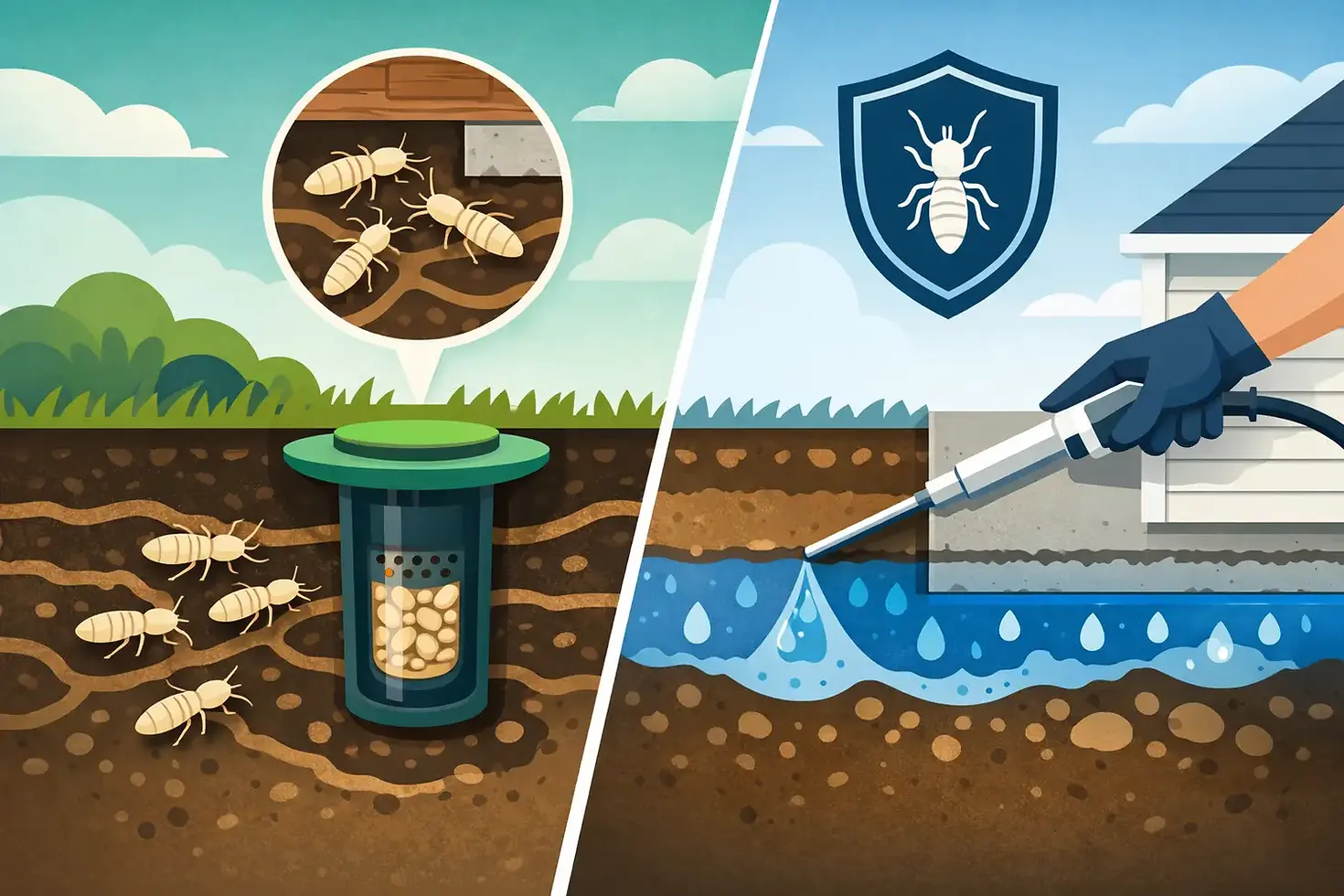
A termite baiting system uses monitored stations placed in the soil around a building. When termites begin feeding in a station, a technician introduces a bait containing a slow-acting active ingredient. Worker termites carry it back through the colony and share it with other termites. Because the material acts gradually, termites continue feeding and distributing it rather than avoiding the bait.
A liquid barrier treatment creates a treated zone in the soil near the foundation, around entry points, or in specific areas where termite activity is confirmed. Depending on the product and treatment plan, termites may be repelled from the zone or controlled after they travel through it. The goal is to block or reduce concealed routes between the soil and the structure.
Baiting is a colony-focused strategy that relies on termite feeding activity and ongoing monitoring. A liquid barrier is a direct, site-specific defense intended to protect the building from termite entry. In some cases, a professional may recommend using both approaches as part of an integrated plan.
When a Termite Baiting System Makes Sense
Baiting can be a strong fit for owners who want a targeted, low-impact approach with minimal disruption to the property. Stations are installed around the exterior, avoiding the broad soil treatment that may be needed for a full liquid barrier. This can be especially appealing for households with children, pets, edible gardens, or a strong preference for reduced pesticide use.
Bait systems are also useful where liquid treatment is difficult to apply thoroughly. A property may have attached concrete patios, decorative hardscaping, drainage features, dense landscaping, or other conditions that make complete soil access challenging. Rather than relying on a continuous treated zone in hard-to-reach areas, monitoring stations give termites an alternative point of contact.
The trade-off is time. Baits do not provide instant results, and termite activity has to intersect with the stations. A colony may locate and feed on a station quickly, or it may take longer depending on weather, food sources, soil moisture, and the size and location of the colony. Stations must be checked consistently by a trained technician. Installing them and forgetting about them is not a termite management plan.
Baiting is also preventative. Even after active termites are no longer found, regular inspections and station maintenance help identify new foraging activity before it becomes a larger structural concern.
What Homeowners Should Expect From Baiting
Expect periodic visits, inspection records, and adjustments based on termite feeding. The technician may initially find only monitoring material in the stations. That does not mean the system has failed. It means termites have not yet begun feeding there, or they may be active elsewhere on the property.
Once feeding is detected, the bait is introduced and monitored. The service team should also inspect the home for moisture concerns, wood-to-soil contact, cracks around utility lines, and other pathways that can make a property more attractive to termites.
When a Liquid Termite Barrier Is the Better Choice
A liquid barrier may be the more practical choice when there is clear, active termite activity near the foundation or a need for immediate protection in a known entry area. It is often used during construction, during major renovations, or at existing structures where a technician can access the necessary soil zones.
For example, if an inspection identifies termites entering through a specific expansion joint, plumbing penetration, or soil area next to a damaged wall, a targeted liquid application may help interrupt that route promptly. Localized treatments can also be appropriate when the infestation is confined and the treatment area is well defined.
A properly designed liquid treatment can provide dependable protection, but its effectiveness depends on coverage. Gaps in the treated zone, disturbed soil, erosion, landscaping changes, drainage problems, or new construction work can affect its performance over time. That is why follow-up inspections still matter, even when a liquid barrier is used.
For environmentally conscious property owners, the key question is not simply whether a liquid treatment is used. It is how it is selected, where it is applied, and whether it is truly needed. A responsible pest management company uses the least disruptive effective approach, targets the treatment carefully, and avoids treating beyond the needs of the property.
Factors That Can Complicate Liquid Treatments
Southern California homes often have features that require careful planning. Concrete slabs, attached garages, narrow side yards, pool decks, mature plantings, and irrigation systems can all influence application methods. Drilling through concrete may be necessary in some situations to reach soil beneath a slab or adjacent to the foundation.
Before treatment, property owners should understand which areas will be addressed, whether drilling is expected, how the landscape will be protected, and what post-treatment recommendations apply. Clear communication is part of safe, professional termite service.
Comparing Results, Disruption, and Ongoing Care
The best choice is rarely about declaring one method better in every situation. It is about matching the treatment to the risk.
A baiting program generally involves less disruption at installation and uses small, contained amounts of material in stations. It requires patience and committed monitoring. It can help suppress or eliminate colonies that are actively feeding, while also serving as an early-warning system for future termite pressure.
A liquid barrier may act more quickly at treated entry points and can be highly effective when applied correctly. However, it may require more preparation, soil access, and in some cases drilling. It also does not replace the need to correct moisture problems or inspect for new termite pathways.
Cost can vary for both options. Bait systems usually involve an installation cost followed by recurring monitoring service. Liquid treatment pricing depends on the size of the structure, construction type, accessibility, extent of activity, and whether drilling or specialized application is required. The lowest initial price is not always the best value if it leaves untreated gaps or does not include meaningful follow-up.
The Role of Integrated Pest Management in Termite Control
Termites are not controlled by product alone. Integrated Pest Management, or IPM, brings together inspection, monitoring, exclusion, moisture management, and targeted treatment. This approach protects the structure while reducing reliance on broad chemical applications.
A termite inspection should look beyond visible damage. Technicians should check for leaking irrigation, standing water near the foundation, clogged drainage, wood mulch piled against siding, soil covering weep screeds, and stored lumber or cardboard near the home. These conditions can create moisture and access that support termite activity.
Some changes are simple but valuable: keep firewood and scrap wood away from the structure, repair leaks promptly, maintain clearance between soil and exterior wood, and avoid directing irrigation toward the foundation. These steps will not eliminate an established colony on their own, but they can reduce conditions that invite termites back.
At Earth First Pest Control, termite recommendations are built around this kind of property-specific assessment. The objective is not to apply more product than necessary. It is to protect the structure with a responsible plan that accounts for people, pets, landscaping, and the environment.
How to Choose Between Baiting and a Liquid Barrier
Start with a thorough professional inspection and ask what evidence supports the recommended method. If the technician finds widespread or active entry points that need prompt control, a liquid treatment may be appropriate. If minimizing treatment footprint, monitoring for future activity, or working around difficult hardscape is the priority, baiting may be the better fit.
Ask whether the recommendation addresses the whole property or only the visible damage. Termites often travel unseen, so treating a damaged baseboard without identifying the colony’s access route can leave the larger issue unresolved. Also ask about inspection schedules, warranty terms, maintenance expectations, and what conditions could affect long-term protection.
The most reassuring termite plan is one you understand and can maintain. When treatment is targeted, monitoring is consistent, and moisture issues are corrected, your property is better positioned to stay protected without sacrificing the health of the people and outdoor spaces you care about.


Comments