


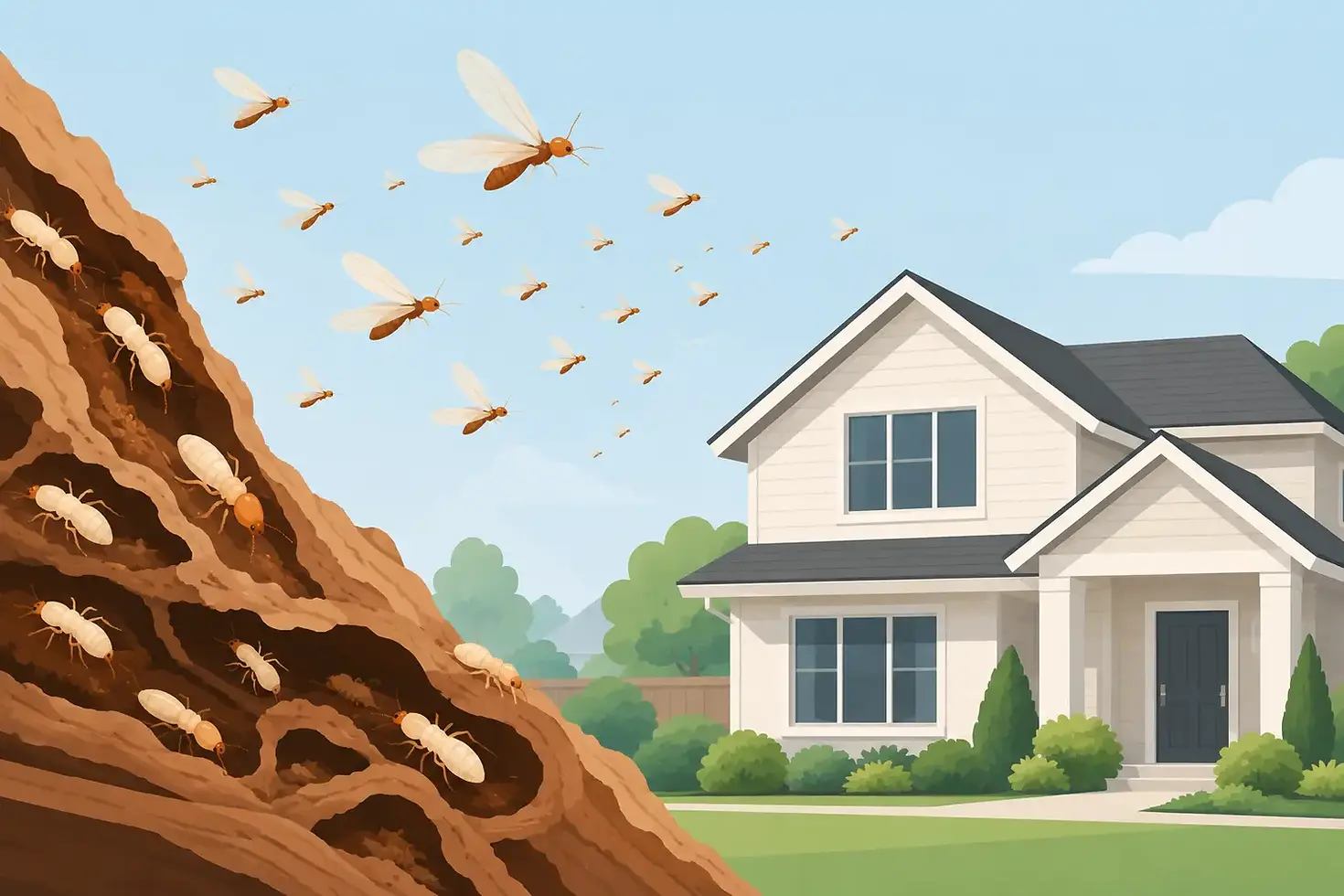
Why Termites Swarm and What It Means for Homes

A sudden cluster of winged insects near a window, porch light, or patio can feel alarming, especially when they appear overnight. Understanding why termites swarm helps put that sight into context: a swarm is a termite colony’s way of reproducing and starting new colonies. It does not always mean termites are actively eating the structure, but it is a clear reason to look closer.
For homeowners and property managers in Los Angeles and Orange County, timing matters. A prompt inspection can distinguish a seasonal outdoor event from a condition that needs targeted treatment, without defaulting to heavy chemical applications around your family, pets, or landscape.
Why Termites Swarm in Southern California
Termites live in organized colonies, most of which remain hidden in soil, wood, walls, or other protected spaces. When a colony matures, it produces reproductive termites called alates. These are the winged males and females people see during a swarm.
Their purpose is simple: leave the original colony, pair up, shed their wings, and try to establish a new colony where moisture, shelter, and a wood food source are available. Swarming termites are not the workers responsible for damaging wood. Still, their arrival signals that a mature colony is nearby, whether on the property, next door, or in surrounding soil and landscaping.
Warm temperatures and moisture are common triggers. In coastal and inland Southern California, swarm activity often follows rain, irrigation, humidity, or a noticeable warm-up after cooler weather. Subterranean termites may swarm in spring, while drywood termites are often more visible from late summer into fall. Exact timing varies by species, weather, and microclimate.
A swarm also needs the right conditions to succeed. Termites are weak fliers and can dehydrate quickly, which is why they may gather around windows, doors, exterior lights, or damp areas. Most alates do not survive to form a new colony. The concern is not that every flying termite will infest your home. The concern is whether existing conditions make your property attractive to the few that do.
What a Termite Swarm Can Tell You
Finding winged termites indoors deserves attention. They may have entered from outside through an open door or gap around a window, but they may also have emerged from a hidden colony within the building. Piles of shed wings near a sill, baseboard, vent, or light fixture are particularly useful clues because termites shed their wings after pairing.
Outdoor swarms are less conclusive. A colony could be located in a tree stump, woodpile, fence, mulch bed, neighboring yard, or beneath the soil near the home. Even so, an outdoor swarm is a good reminder to inspect the conditions around the structure, especially if the property has moisture issues or exposed wood.
The species matters. Subterranean termites travel from the soil and typically need moisture, often using protected mud tubes to move between the ground and a structure. Drywood termites live inside dry wood and do not need soil contact, which can make them harder to detect until evidence such as frass, the small pellet-like droppings they leave behind, appears.
A professional inspection is the practical next step because flying insects are frequently misidentified. Flying ants also swarm, and they can look similar at a glance. Termites have straight antennae, a broad waist, and four wings of similar length. Flying ants have elbowed antennae, a narrow waist, and front wings that are longer than their rear wings. Correct identification prevents unnecessary treatment and directs attention to the actual issue.
Why Flying Termites Are Not a Problem to Ignore
A termite swarm is not proof of severe structural damage, and it should not be treated as one. But waiting for visible damage is rarely a wise strategy. Termites work from concealed areas, so hollow-sounding wood, blistered paint, stuck doors, damaged trim, or mud tubes may appear only after activity has been present for some time.
The risk depends on several factors: the termite species, the colony’s location, available moisture, construction details, and how long activity has gone unnoticed. A home with wood-to-soil contact, leaking plumbing, poor drainage, dense vegetation against the exterior, or untreated wood debris close to the foundation has more opportunities for termite activity than a dry, well-maintained property. That does not mean a well-kept home is immune. It means prevention should be tailored to real conditions rather than handled with one-size-fits-all treatments.
For commercial properties, early action is equally valuable. Termites can affect tenant spaces, common areas, storage locations, landscaping features, and wood elements that are not inspected frequently. Monitoring and documentation support better maintenance decisions while helping minimize disruption to occupants and operations.
What to Do When You See a Swarm
Start by collecting a small sample if possible. Place several insects or shed wings in a sealed clear container or take clear photographs near a coin for scale. Avoid spraying the insects before they can be identified. A surface spray may kill visible alates while doing nothing to address a colony hidden in wood or soil.
Next, note where and when you found them. Were they indoors or outdoors? Did they emerge from a wall, floor, window frame, attic vent, or exterior landscaping? Is there a plumbing leak, standing water, damaged wood, or a mulch bed against that area? These details help an inspector evaluate likely sources.
Then arrange a professional termite inspection. The goal should be to identify the species, locate evidence of active or previous infestation, assess conducive conditions, and recommend the least disruptive effective solution. Earth First Pest Control approaches termite concerns through responsible, targeted pest management that prioritizes your family, pets, and the environment alongside proven results.
Prevention That Makes a Real Difference
No prevention plan can guarantee that termites will never fly near a Southern California property. Swarming is a natural part of their life cycle, and neighboring colonies may be beyond your control. You can, however, make a building less favorable for concealed termite activity.
Keep soil and mulch below siding or stucco weep screeds, and avoid allowing wood trim or fencing to sit directly against soil. Repair leaking faucets, irrigation lines, roof leaks, and plumbing issues promptly. Direct water away from the foundation, clear debris from gutters, and ensure crawl spaces or other enclosed areas have appropriate ventilation.
Store firewood, lumber, cardboard, and dead wood away from the building whenever possible. Trim plants so branches and dense shrubs do not trap moisture against walls or conceal inspection areas. Seal practical gaps around utility openings and exterior penetrations, while recognizing that exclusion alone cannot stop subterranean termites that travel through the soil.
For properties with a history of termites or conditions that cannot be fully changed, ongoing monitoring may be the sensible trade-off. Regular checks create opportunities to find early evidence before a problem grows. This is often more protective and more environmentally responsible than reacting only after damage becomes obvious.
When Treatment Is Needed, Targeting Matters
The right termite response depends on what an inspection finds. Localized drywood activity may call for a different approach than widespread drywood infestation. Subterranean termite control may involve addressing access points, moisture conditions, and active areas associated with the colony. In some situations, repair recommendations are part of protecting the structure long term.
Responsible pest management does not mean ignoring an active infestation. It means using informed inspection, prevention, monitoring, and carefully selected treatments instead of applying more pesticide than the situation requires. Ask what termite species was identified, where the evidence was found, what treatment is recommended, and how the result will be monitored. Clear answers allow you to make a decision that protects both the property and the people who use it.
If winged termites show up, take a breath, save a sample, and have the property evaluated while the evidence is fresh. Early, thoughtful action gives you more choices and a better chance to protect the home you have worked hard to maintain.


Comments